
Sweeter Than Honey
Welcome to our 8-part series, Sweeter Than Honey, where we’ll use the rich imagery of bees, honey, and the rhythms of creation to explore how Sabbath invites us to step out of exhaustion and rediscover the sweetness, rest, and delight found in the presence of God.
Psalm 119:103
“How sweet are your words to my taste, sweeter than honey to my mouth!”
Have you ever tasted something so good that it made you pause? Not just “that’s nice,” but stop-everything, close-your-eyes, savor-it kind of good?
This time of year, the first thing that comes to my mind is a carrot cake that a woman at my church bakes. The cake is so flavorful and the cream cheese frosting is just perfect. When she brings it to church potlucks, I always try to sneak a piece home to savor later with a cup of coffee.
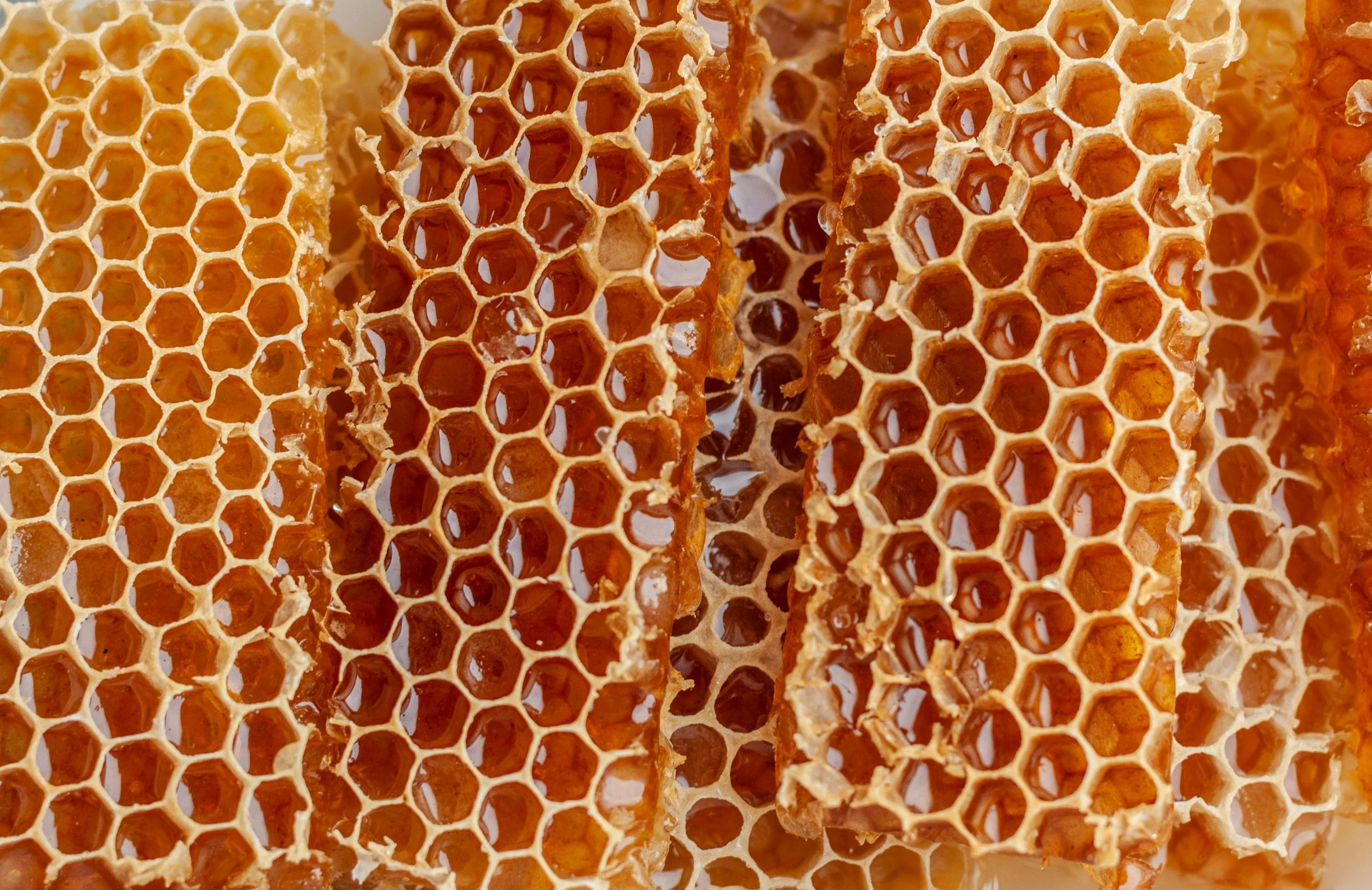
Honey is like that too. We don’t rush honey. We linger over it. It’s rich, golden, slow, and unmistakably sweet. That’s exactly the image the psalmist gives us in Psalm 119:103: “How sweet are your words to my taste, sweeter than honey to my mouth!”
The psalmist isn’t merely saying God’s Word is true or helpful. He’s saying it is deeply satisfying. But if we’re honest, many of us don’t experience Scripture that way.
We live in a world of constant consumption. We scroll, rush, multitask, skim headlines, and squeeze spiritual practices into whatever time remains. We may read a quick verse, whisper a hurried prayer, or listen to a podcast while folding laundry, but often we are consuming rather than savoring.
Yet honey doesn’t work like that. Can you imagine gulping honey? You can’t. It demands slowness.
In the same way, God never intended His Word to be something we rush through. He invites us to slow down enough to truly taste.
This is one of the reasons Sabbath matters so deeply.
Sabbath is not simply about taking a break from work. It is about creating space to delight in God. It is a weekly invitation to step out of the noise and distraction of modern life and into a slower, deeper rhythm where we can say:
“God, I want to taste Your goodness—not just know about it.”
And perhaps that is what many of us are missing. Not more information, not another productivity hack, not a better planner, but the ability to slow down long enough to savor the sweetness of God.
What would change if we stopped treating Scripture like fast food and began savoring it like honey?